
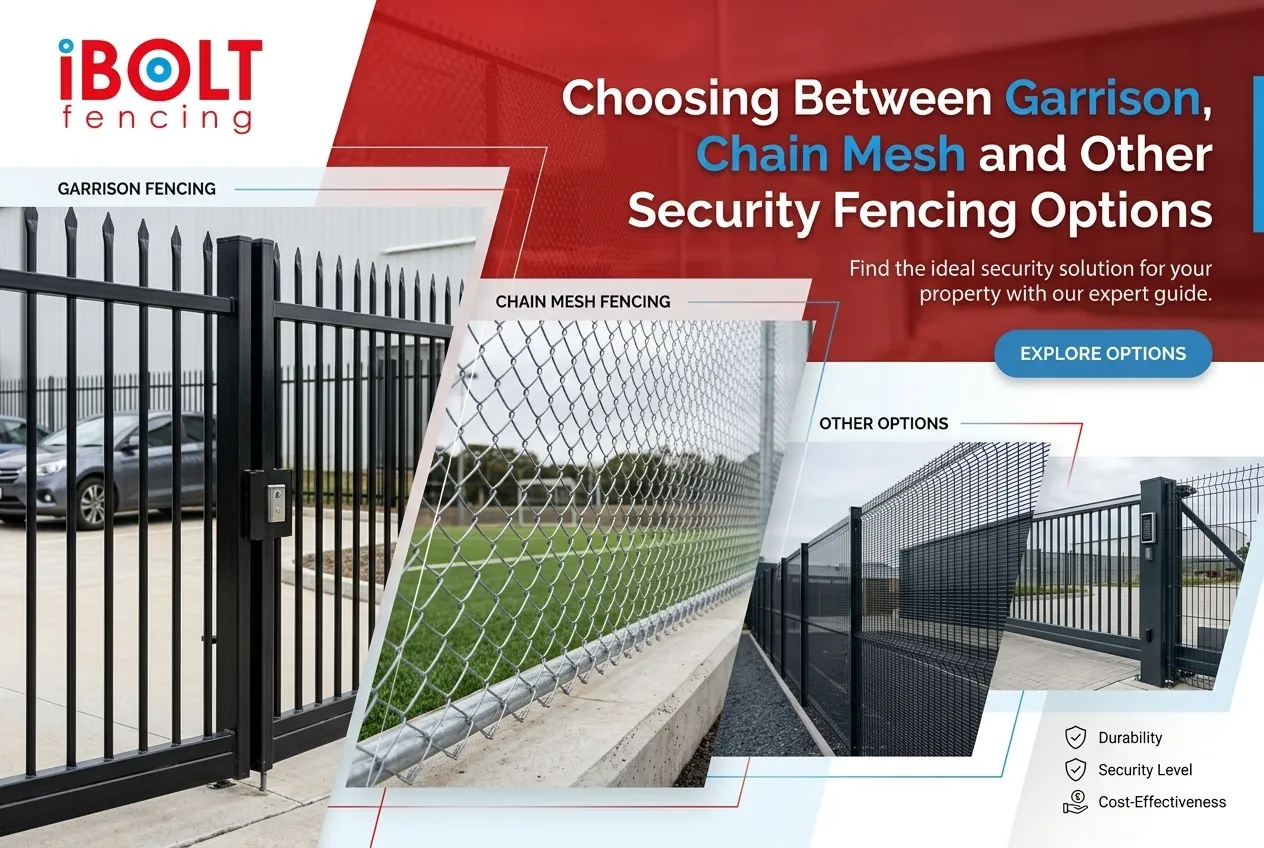
Two commercial properties can sit on the same street and still require very different fencing. One may prioritise visibility and economical boundary coverage, while another may want a more substantial visual barrier around restricted areas. Businesses comparing security fencing perth should therefore assess how each fencing type performs in the context of their actual site.
Garrison, chain mesh and other security-oriented systems each have distinct characteristics. Understanding those differences can make the selection process considerably easier.
Start With the Site Rather Than the Fence
A common mistake is choosing a fence style before defining the job it needs to perform.
Begin by identifying:
-
Areas requiring restricted access
-
Vehicle and pedestrian entry points
-
Sections visible to customers or the public
-
Equipment or stock stored outdoors
-
Boundary lengths
-
Changes in ground level
-
Locations covered by surveillance equipment
-
Areas requiring greater privacy
This information provides a useful basis for comparing security fencing Perth options.
Where Garrison-Style Fencing Fits
Garrison-style fencing is commonly considered where a business wants a structured, robust-looking perimeter while maintaining visibility through the fence.
Its vertical profile can suit street-facing boundaries, commercial premises and operational facilities where visual presentation matters alongside access control.
Companies researching garrison fencing perth may find it particularly relevant for boundaries where a more substantial appearance is preferred over flexible mesh.
Advantages of an Open Profile
Visibility can be useful for security and everyday operations.
Monitoring activity around the boundary
Open fencing allows people inside the property to retain sightlines toward surrounding areas. It may also make it easier to coordinate perimeter design with exterior CCTV coverage or lighting.
Garrison fencing Perth can consequently be useful where businesses want strong boundary definition without creating a fully screened enclosure.
Where Chain Mesh Makes Sense
Chain mesh is widely used across sporting, industrial and commercial environments because it can cover substantial boundaries while preserving visibility.
It can be appropriate for:
-
Storage yards
-
Factory boundaries
-
Sports facilities
-
Service compounds
-
Utility areas
-
Commercial properties
-
Internal separation zones
Businesses considering chain mesh fencing perth may value its straightforward, functional character.
Chain mesh fencing Perth can also work well where the primary objective is to define a perimeter and discourage casual access without introducing a visually heavy boundary.
Comparing Appearance and Visibility
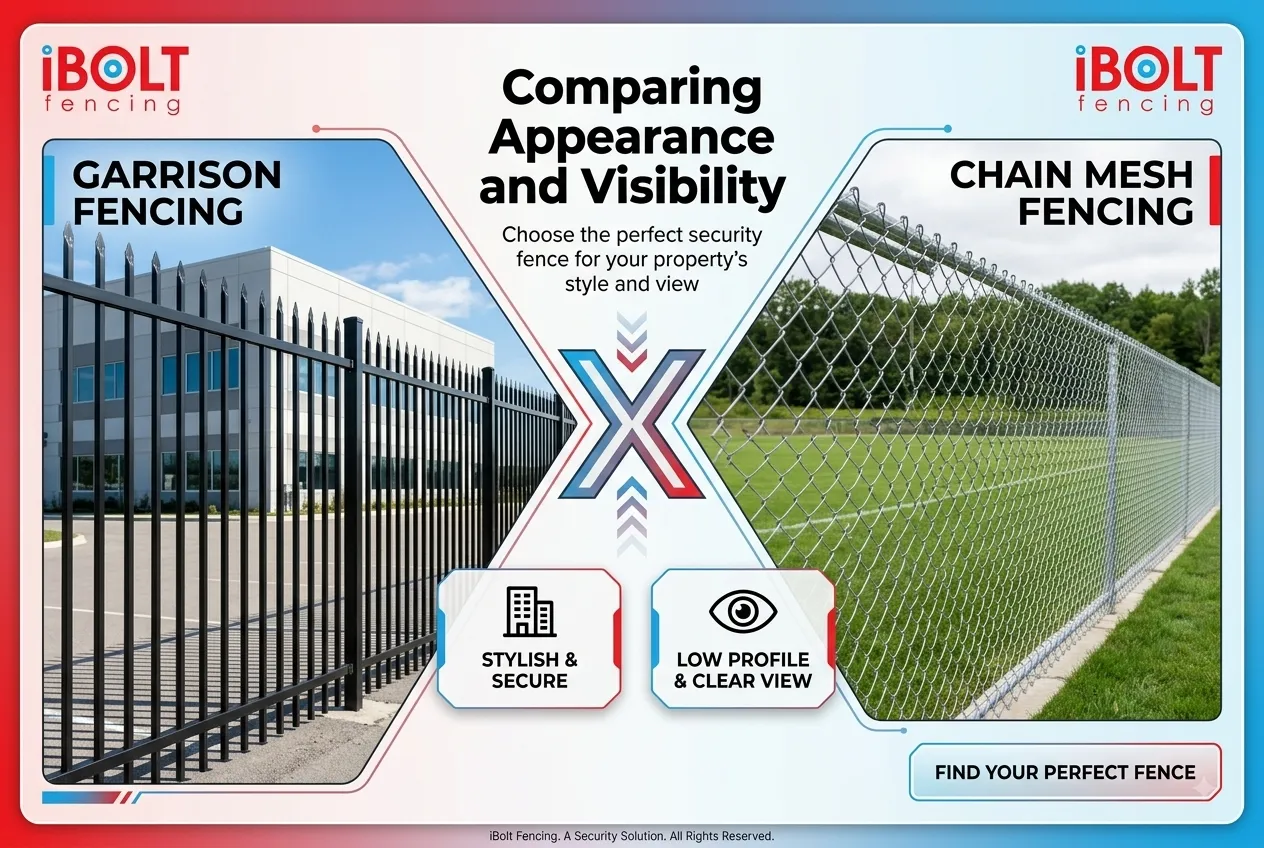
The visual effect of a fence can matter considerably on a customer-facing property.
Garrison systems generally have a more architectural, structured appearance. Chain mesh is usually perceived as more functional and utilitarian. Palisade-style systems create another distinct look and may suit properties where a strong perimeter presence is desired.
The best option depends on where the fence will be installed. Some businesses use one style along the main frontage and a different system around less-visible operational boundaries.
Think About the Entire Security Strategy
Security fencing is only one part of property management. Entry procedures, gates, lighting, surveillance and staff practices may all affect how effectively a site is controlled.
Match the Fence With Access Points
A perimeter with poorly located entrances can become difficult to use.
Separate different types of traffic where useful
A busy industrial property may benefit from separating delivery trucks, employee vehicles and pedestrians. Fencing can help guide movement toward dedicated access points and make the property easier to manage.
This is one reason security fencing Perth projects should include gate planning from the beginning rather than adding gates after the fence layout has already been finalised.
Evaluate Maintenance and Surrounding Conditions
No fence exists in isolation. Vegetation, soil conditions, nearby structures and daily site activity can affect its practicality.
Chain mesh near storage areas should remain accessible for general inspection. Garrison fencing near landscaped sections may require enough clearance to prevent vegetation from interfering with the boundary.
Consider how easy it will be to keep the fence line clear and whether vehicles or stored materials could repeatedly come into contact with it.
Avoid Over-Specifying the Perimeter
A stronger or more expensive system is not automatically better if the property does not require it.
For example, a low-risk internal separation area may not need the same fencing specification as the external boundary. Likewise, a long rear boundary may have different aesthetic requirements from a customer-facing entrance.
Matching each area to its actual purpose can provide a more balanced solution.
Why Choose Us
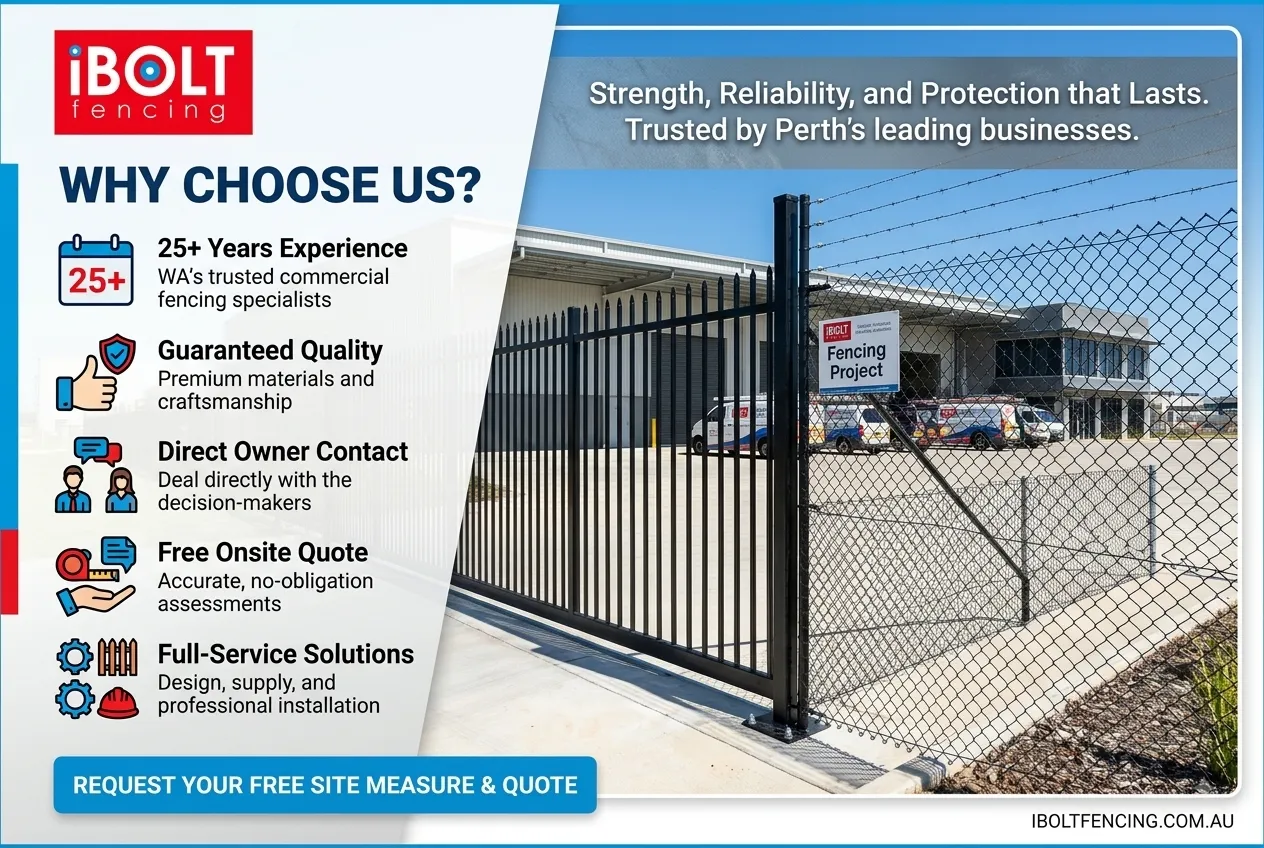
iBOLT Fencing can assist businesses that need to compare different fencing styles without assuming that one system is right for every location. Considering visibility, access, appearance and site activity together can produce a more practical design.
This approach is particularly useful when a property includes multiple zones, because garrison, chain mesh or other fencing can be evaluated according to the role each boundary needs to perform.
About Us
iBOLT Fencing provides fencing options for commercial, industrial and security-focused applications around Perth. The company can work with clients to consider perimeter requirements, gates and suitable fencing configurations.
For businesses comparing garrison fencing Perth and chain mesh fencing Perth, discussing how the property is used can help narrow the available choices before installation planning begins.
Conclusion
Garrison, chain mesh and other security fencing systems each solve different perimeter problems. Garrison can provide a structured appearance, while chain mesh offers practical visibility and broad application across commercial and industrial settings.
The most useful choice comes from examining the property first—its boundaries, traffic, access points and security priorities—and selecting fencing that supports those requirements rather than simply choosing a style by appearance.
